
Screw
A helical threaded fastener and one of the six simple machines.

Tknbeez · CC BY-SA 3.0
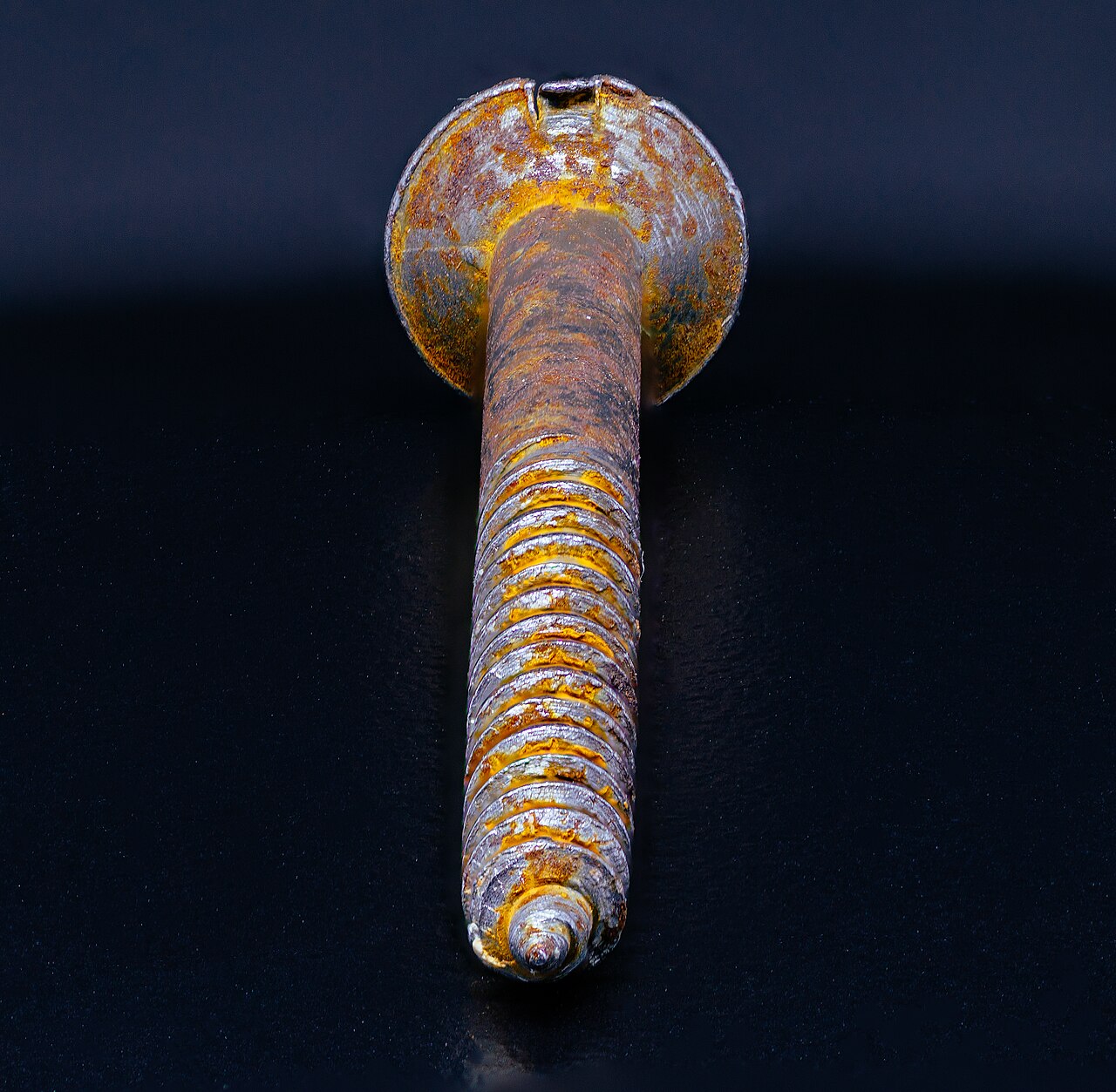
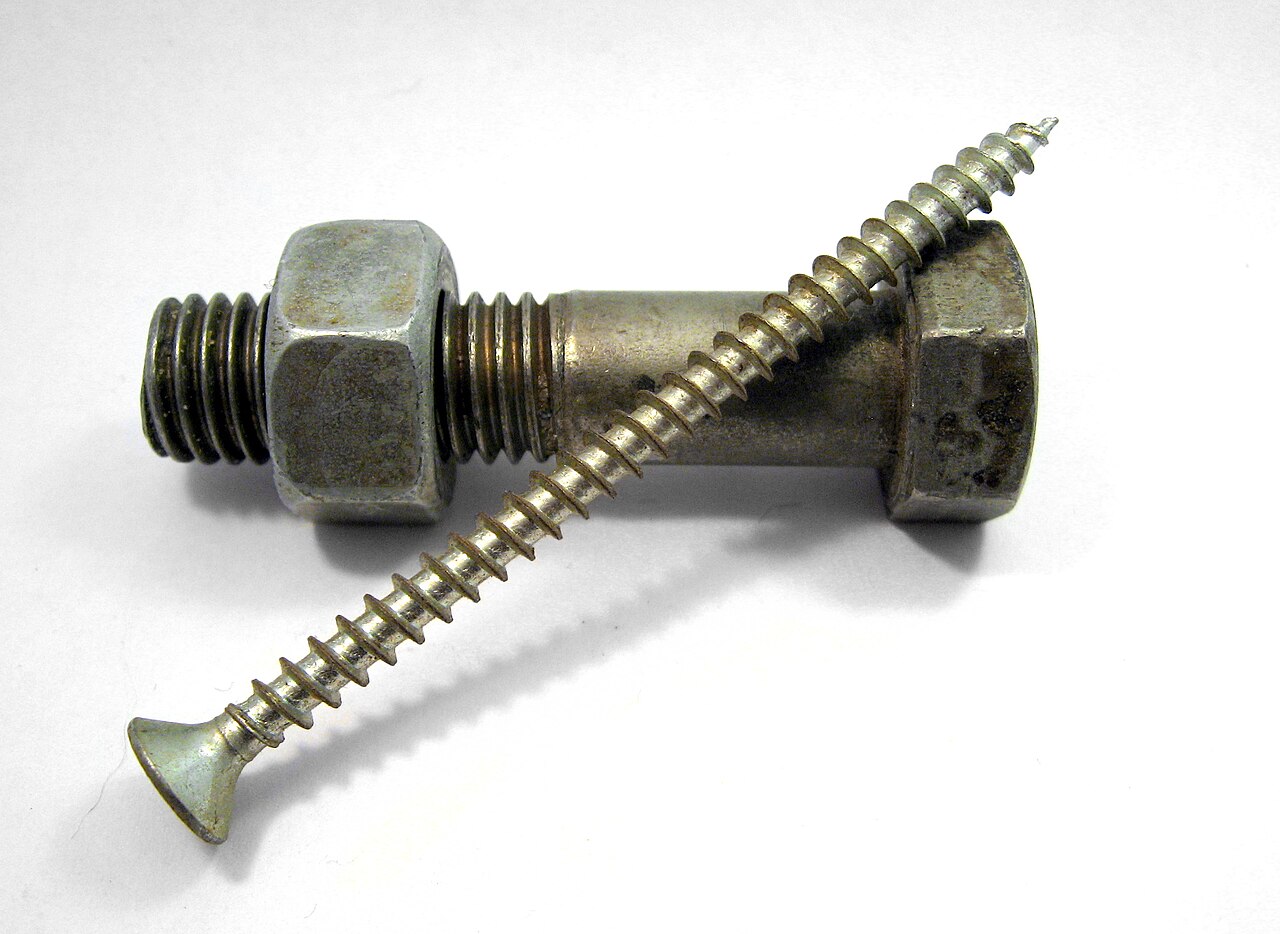
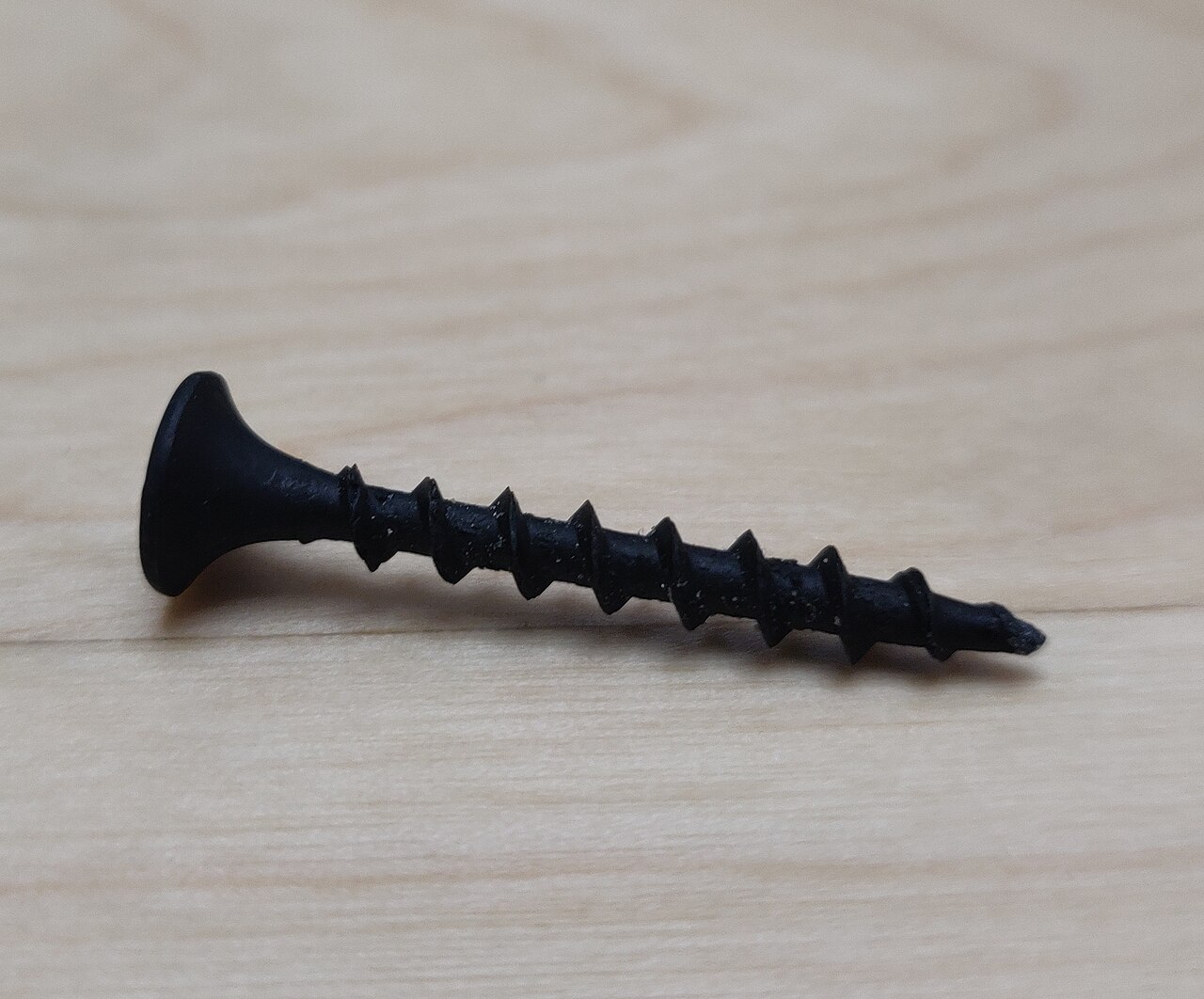
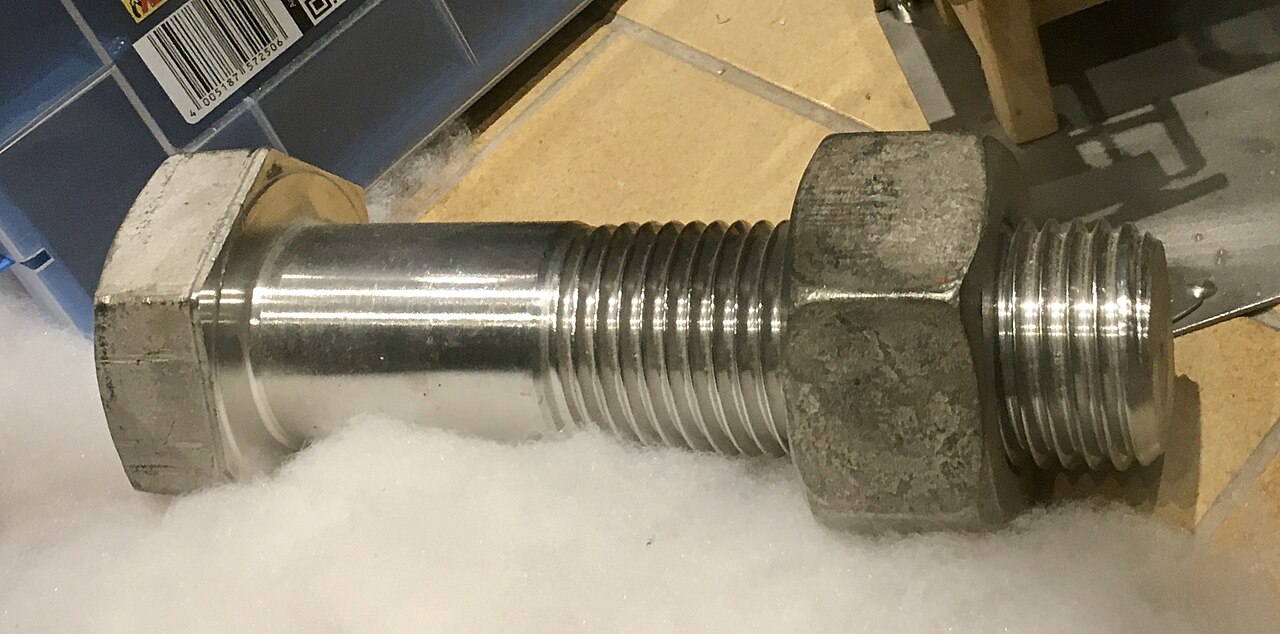
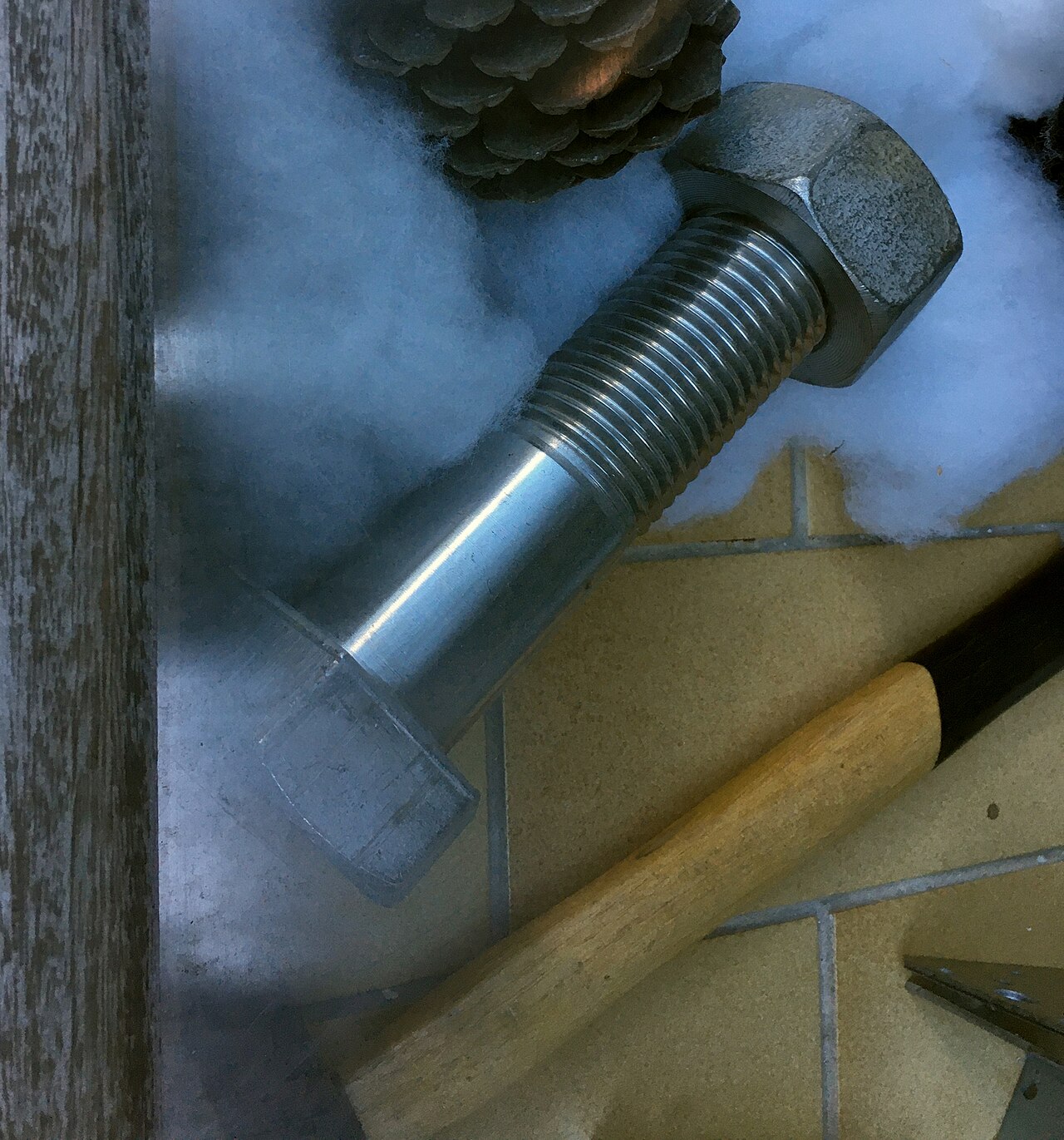
A screw is an externally helical threaded fastener capable of being tightened or released by a twisting force (torque) to the head. The most common use of screws is to hold objects together, and they exist in many forms for a variety of materials. The screw mechanism is one of the six classical simple machines defined by Renaissance scientists.
Lore & Background
The gimlet-pointed screw was patented by Thomas J. The American development of the turret lathe (1840s) and automatic screw machines (1870s) drastically reduced unit costs. L. In the early 1930s, American Henry F. Phillips popularized the Phillips-head screw.
Reader's Guide
The screw is significant as one of the last of the six classical simple machines to be invented, with origins in the Neo-Assyrian period. Its development from wooden screws in ancient presses to metal fasteners in the 18th century enabled the Industrial Revolution, particularly through precision screws used in micrometers and lathes. The mass production of screws, pioneered by the Wyatt brothers and Henry Maudslay, transformed manufacturing by drastically lowering unit costs and increasing availability. Standardization of threadforms began in the late 18th century and continued through the 1940s with the ISO metric screw thread and Unified Thread Standard. The screw's legacy includes its role in holding objects together across countless applications, from simple household items to complex machinery. The evolution of drive types—from simple slots and squares to Robertson and Phillips heads—reflects ongoing innovation to improve ease of use and manufacturing efficiency. The screw remains a fundamental component of modern technology, with its basic mechanism unchanged for millennia.
Did You Know?
- The first documentation of the screwdriver appears in earlier manuscripts, including the works of Leonardo da Vinci, predating the medieval Housebook of Wolfegg Castle.
- While some bicycle pedals use a left-hand thread on the left side to prevent loosening, many modern bicycles use right-hand threads on both pedals with a different mechanism.
Origins and the Attribution Debate
The question of who first conceived the water screw remains one of engineering history's most contested puzzles. Archimedes of Syracuse has long been credited as the inventor, yet the evidence is far from conclusive. The Greek scholar Posidonius claimed Archimedes devised the device during a visit to Egypt between 283 and 246 BC, possibly inspired by a water wheel he observed in operation. Other historians, however, contend that Archimedes merely encountered a technology already in Egyptian use. Canadian archaeologist John Peter Oleson sharpened this doubt, noting that no literary or archaeological trace of the screw exists before roughly 250 BC and questioning why the device became so tightly bound to Archimedes's name without clear explanation. Assyriologist Stephanie Dalley pushed the timeline even further back, citing an inscription of King Sennacherib alongside references in Strabo and Philo of Byzantium to argue that bronze screws irrigated the Hanging Gardens of Babylon. A BBC documentary even had a screw built from Sennacherib's description to test feasibility, while scholar Yaman Boluk countered that if Dalley was correct, the Assyrian screws would have featured an opening in the outer cylinder and blades detached from it—unlike the joined-blade design in the reconstruction.
Ancient Spread and Gradual Decline
Once established, the water screw spread remarkably across the ancient world. Moschion recorded its use as a bilge pump aboard the great ship built for Hiero II of Syracuse, while Posidonius noted water screws draining Spanish mines. Archaeological remains have surfaced in Egypt, Spain, France, and Italy, and literary texts place the device in Mesopotamia, Syria, and Spain as well. Diodorus described screws irrigating the Nile Delta to supply military camps and nearby cities, and Vitruvius detailed a wooden eight-blade screw in his architectural treatise written between 27 and 22 BC. The earliest surviving visual depiction is a fresco at the villa Casa di P. Cornelius Teges in Pompeii, painted before the city's destruction in 79 AD. Yet by the end of the third century, the screw had largely vanished from European use. Oleson's investigation of Fayum suggested that by the late first century BC or first century AD, records of the device had already thinned considerably, possibly because screws were uncommon or simply not subject to taxation. Historian Lynn White Jr. proposed that the technology persisted in Visigothic and Islamic Spain, and Oleson theorised that Arab conquerors may have reintroduced the screw to Europe following their eighth-century conquest of the Iberian Peninsula.
Renaissance Revival and East-Asian Diffusion
After centuries of relative obscurity in Europe, the Archimedes' screw re-emerged during the Renaissance. The first post-antiquity illustration appeared in the 1405 manuscript Bellifortis by German engineer Konrad Kyeser. Leonardo da Vinci and Agostino Ramelli both depicted the device in their theatre-of-machine catalogues, while Galileo Galilei explained its mechanical function in his work Mecchanice. The screw found a particularly powerful application in the Dutch Golden Age, where polder mills—windmills driving Archimedes' screws—drained low-lying land by moving large volumes of water across small head differences. The technology also crossed into East Asia: in 1612, Italian Jesuit Sabatino de Ursis and Chinese official Xu Guangqi published Hydraulic Methods of the Far West, describing the screw's agricultural uses and construction. Despite scholarly praise, adoption in China and Korea remained limited. Albert Koenig suggested that imperial scholars' preference for philosophy, the high cost of producing a screw, and the impracticality of Vitruvius's particular design all contributed to its marginal status in those regions.
Modern Pumping and Turbine Applications
In the modern era, the Archimedes' screw has found renewed relevance in both pumping and power generation. As a pump, it remains widely deployed in wastewater treatment plants and for dewatering low-lying regions, turning a helical surface inside a pipe to lift water from a lower body into channels or treatment systems. The device's dual nature was formally recognised in 1991, when a patent for the Archimedes screw turbine was filed, with testing conducted between 1993 and 1995. Run in reverse, the screw functions as a small hydroelectric generator suited to low-head sites that traditional turbines cannot efficiently exploit. These screw turbines operate across a broad range of flows—from 0.01 to 14.5 cubic metres per second—and heads from 0.1 to 10 metres, filling a gap in the hydroelectric market where moderate flow rates and low heads make conventional high-performance technologies impractical. This versatility has cemented the screw's role as a practical, low-impact solution for renewable energy in settings where larger turbines simply cannot compete.
Gallery
Frequently Asked Questions
What is a Screw in construction and engineering?
A screw is a fastener featuring an external helical thread that you tighten or loosen by applying rotational force to its head. It comes in countless shapes and sizes tailored to different materials and applications.
Why is the Screw classified as a simple machine?
Renaissance-era scientists identified the screw mechanism as one of the six classical simple machines because it converts rotational input into linear output. That mechanical advantage lets a small twisting force produce strong clamping pressure.
How does a screw actually hold objects together?
When torque is applied to the head, the helical threads bite into the surrounding material, translating your rotational motion into a pulling or pushing force. This direct engagement is why screws are the go-to fastener for joining components in construction and manufacturing.
What makes a screw different from other fasteners?
Unlike a smooth nail or a plain bolt, a screw's threaded exterior grips the material directly, often removing the need for a separate nut or washer. That self-tapping quality is what gives the screw such a wide range of uses across wood, metal, and plastic.
More in Construction And Engineering 1-18
Spotted an error? Know more?
This is a living reference — every entry is fact-audited, and reader corrections feed straight into our audit queue. Suggest an edit · See this site's audit record