
Tram
Urban rail vehicles running on street tracks.

Amélie Tsaag Valren · CC BY-SA 4.0
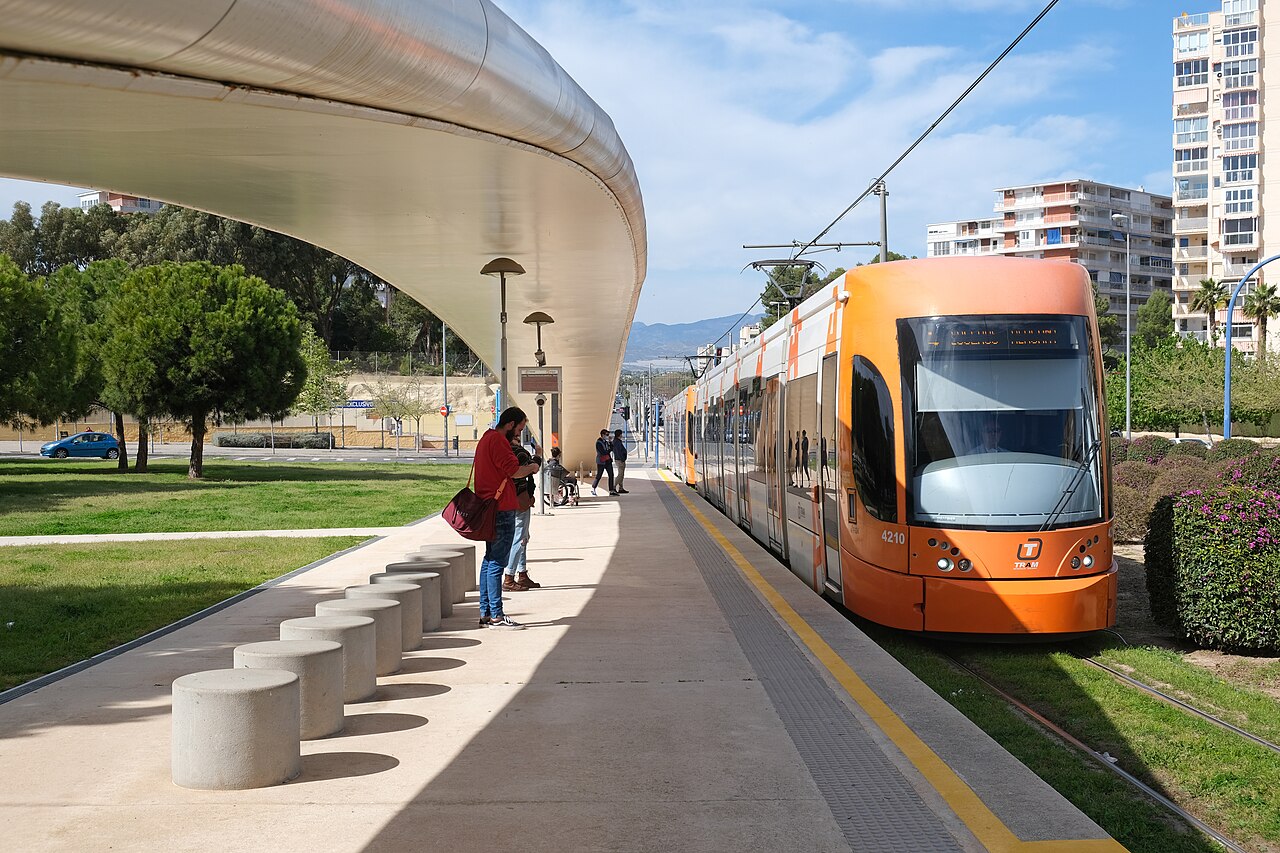
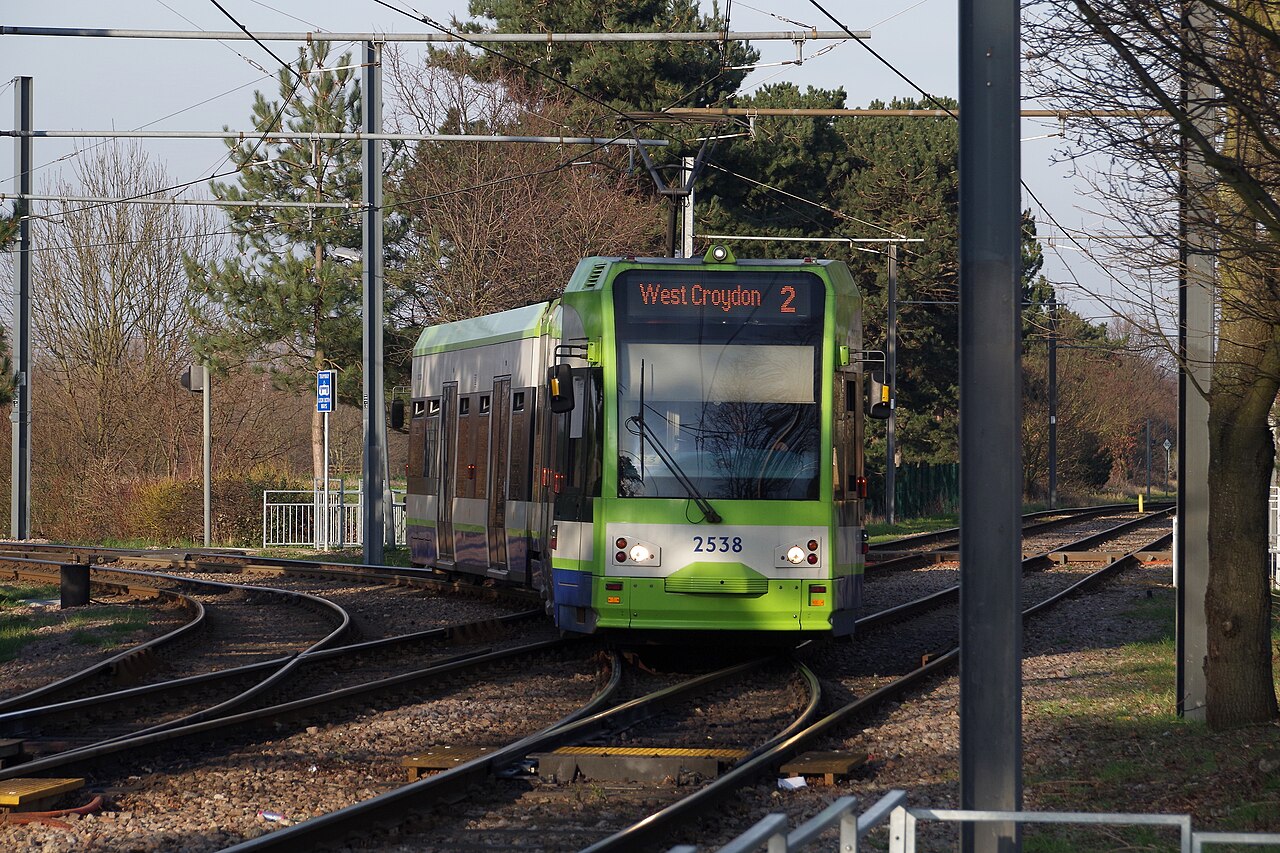
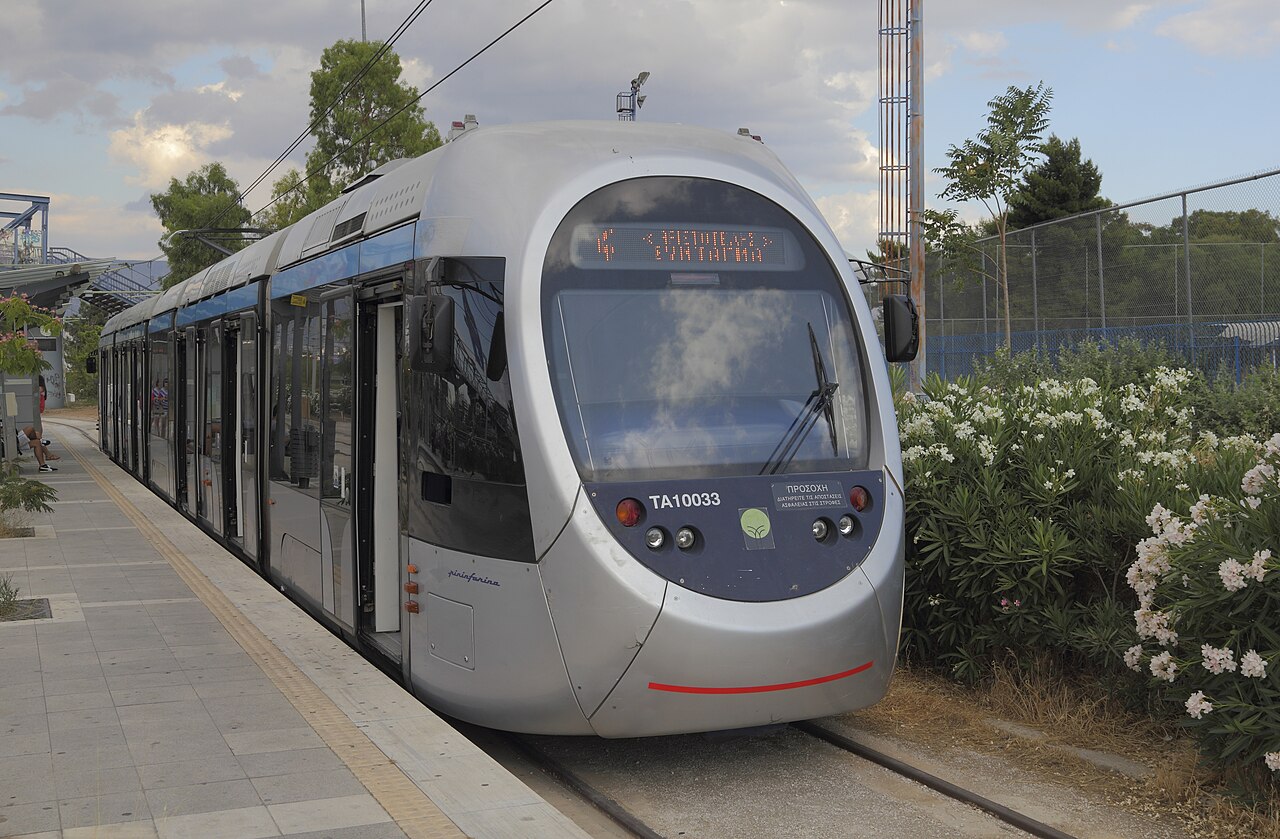
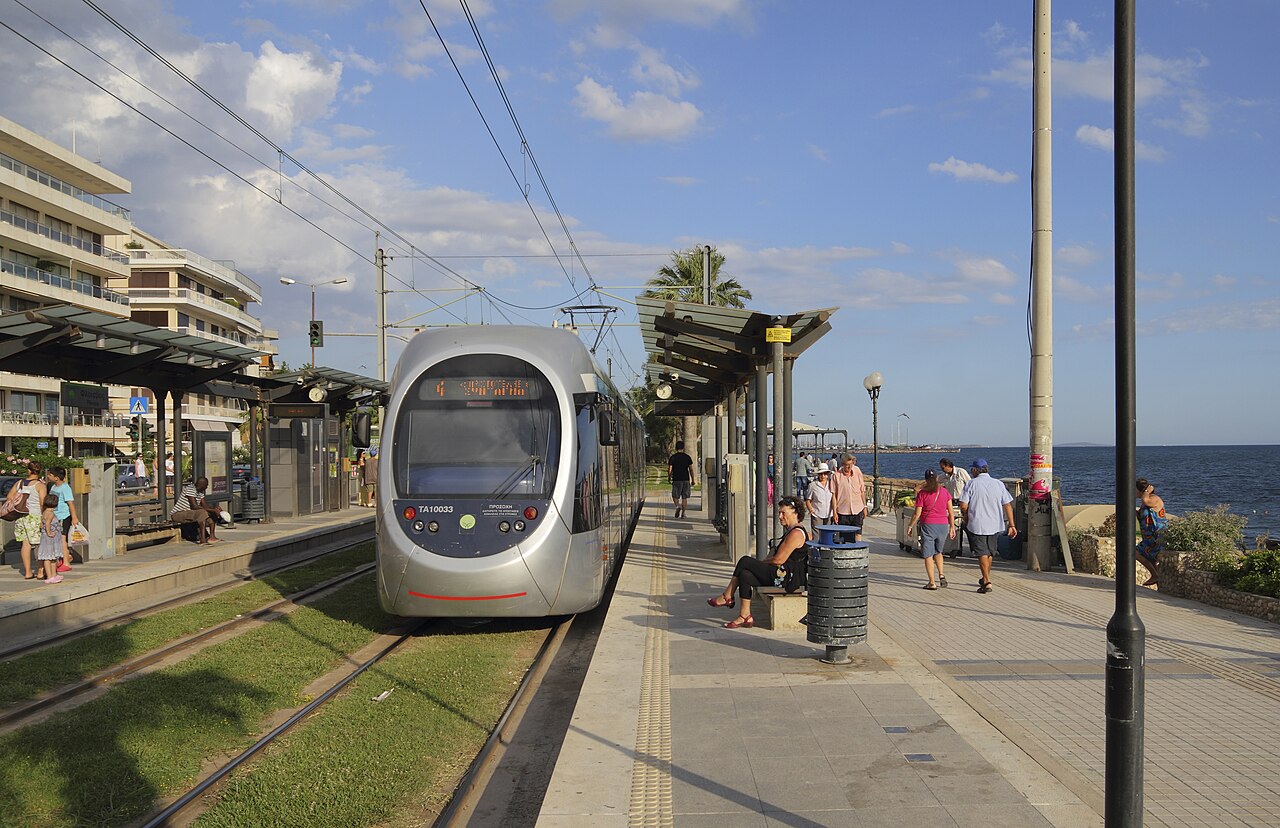
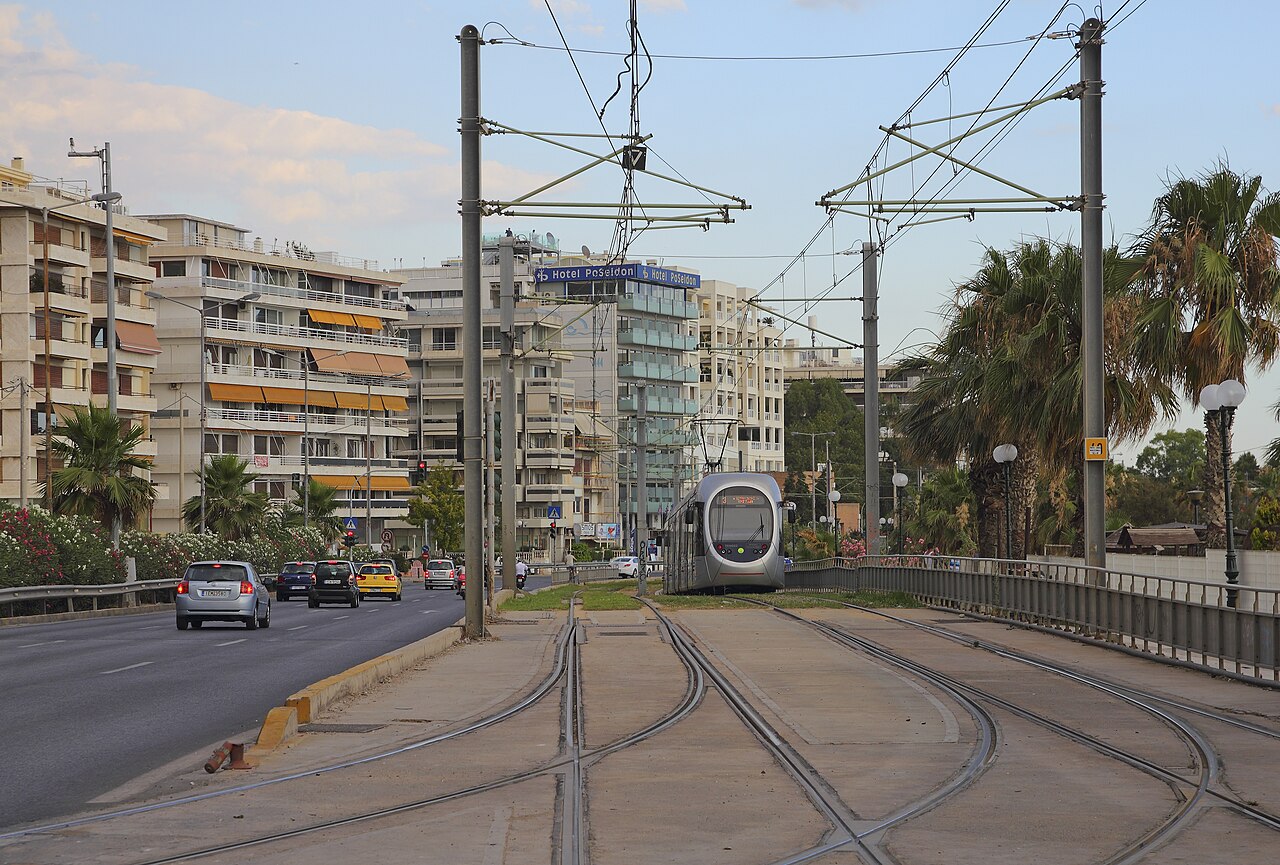
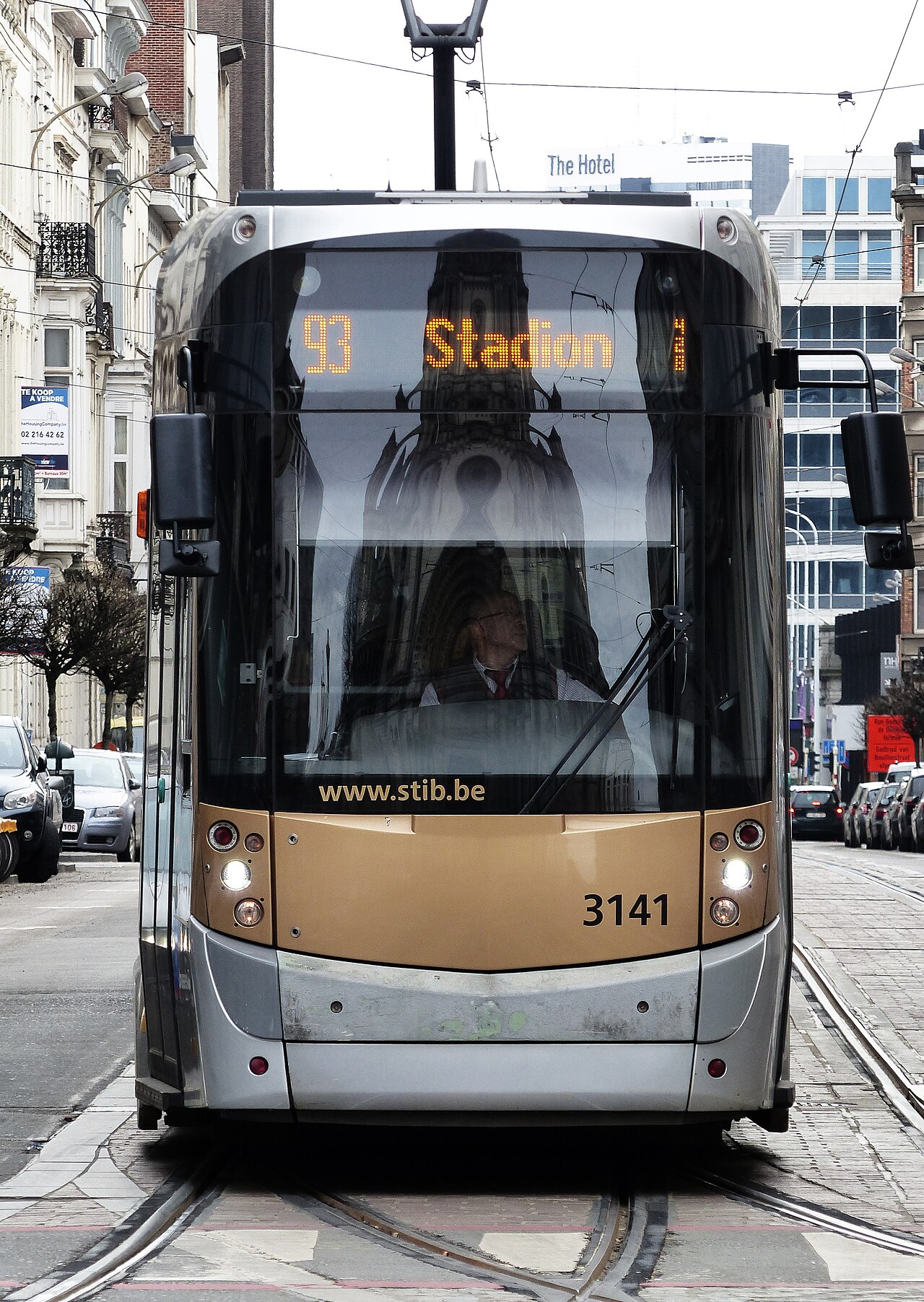
A tram (also known as a tramcar, streetcar, or trolley) is an urban rail transit type in which vehicles run on tramway tracks laid on public streets, though some operate on segregated right-of-way. Trams are a type of light rail, distinguished by their integration into urban streets, lower traffic signal priority, coexistence with other vehicles, and lower capacity. They are usually lighter and shorter than main line and rapid transit trains, and most use electrical power fed by a pantograph, trolley pole, bow collector, or third rail. Trams have been a key form of public transport since the early 19th century, evolving from horse-drawn cars to electric systems, and have seen a resurgence since the 1980s.
- type
- Urban rail transit
- power_source
- Electricity (overhead lines, third rail) or dual power (electricity/diesel)
- common_alternate_names
- Streetcar, trolley, tramcar
- era_of_electric_adoption
- Late 19th to early 20th centuries
Lore & Background
The history of passenger trams began in the early nineteenth century. Street railways developed earlier in America than in Europe due to poor paving in U.S. cities, which made horse-drawn omnibuses uncomfortable; rails provided a smoother ride.
Reader's Guide
Trams represent a significant evolution in urban transit, offering lower rolling resistance than road vehicles due to metal wheels on steel rails, allowing greater loads with less effort. They largely replaced animal power in the late 19th and early 20th centuries, driven by the high total cost of ownership of horses. The decline of trams in the early to mid 20th century was due to improvements in other vehicles such as buses, but trams have seen a resurgence since the 1980s. Their legacy includes the development of light rail systems and tram-trains that can run on mainline railway tracks. The terminology varies regionally: North Americans prefer 'streetcar' or 'trolley,' while 'tram' is used in the UK and elsewhere. The word 'trolley' likely derives from the verb 'troll,' meaning 'roll,' and is also used for trolleybuses and tourist trolleys, causing some confusion.
Did You Know?
- The word 'tram' probably derived from Middle Flemish 'trame,' meaning 'beam' or 'rung,' and originally referred to wooden beams used for railway tracks.
- Electric trams largely replaced horse-drawn trams in the late 19th and early 20th centuries.
- In the United States, the term 'trolley' is sometimes used for rubber-tired buses made to resemble streetcars, officially called 'trolley-replica buses' by the APTA.
From TAZARA to a National Champion
The story of CCECC begins not in a boardroom but on a vast African construction site. Between 1970 and 1975, the Foreign Aid Department of China's Ministry of Railways led the construction of the TAZARA Railway, a 1,860-kilometer line linking Tanzania and Zambia. That project, the single largest foreign-aid undertaking China had ever mounted, forged the technical muscle and international credibility that would define the corporation's future. When the State Council of the People's Republic of China gave its approval in June 1979, the Foreign Aid Department was formally incorporated as the China Civil Engineering Construction Corporation, transforming a dedicated aid outfit into a permanent state-owned enterprise. The new entity inherited not just personnel and hard-won experience but a philosophy: that large-scale civil engineering, executed abroad, could serve as a bridge of economic cooperation between nations. From that TAZARA foundation, CCECC would grow into one of the world's most recognized names in international contracting, carrying the spirit of that first great railway into every subsequent project it undertook.
Restructuring Through the 1990s and 2000s
CCECC's corporate identity shifted dramatically over the late 1990s and early 2000s, mirroring broader reforms across China's state-enterprise landscape. In December 1996, with the backing of the State Economic and Trade Commission and the Ministry of Railways, the corporation was reorganized into a Group structure, with the original CCECC entity serving as the core enterprise. Three years later, in September 2000, the company severed its administrative ties with the Ministry of Railway and was instead placed under the Industry Commission of Central Enterprises of the Communist Party of China's Central Committee. At the start of 2003, CCECC joined a cohort of 195 central enterprises brought under the direct supervision of the State-owned Assets Supervision and Administration Commission of the State Council. That same year, in September 2003, a strategic merger with the China Railway Construction Corporation was completed under a specific SASAC reform document. Beyond its operational structure, CCECC holds prominent positions in industry bodies: it is a member of the China Chamber of International Commerce, a vice-chairman-level unit of the China International Contractors Association, and a director of the China International Engineering Consulting Association.
A Global Portfolio Beyond Railways
While CCECC's DNA is rooted in railway construction, its commercial footprint has broadened into a remarkably diverse set of industries. The corporation now operates in more than forty countries and regions, maintaining over twenty overseas offices or subsidiaries that serve as local anchors for its international work. Its business portfolio stretches well beyond track-laying to encompass civil engineering design and consultancy, real estate development, commodity trading, industrial investment, and even hotel management. This diversification has allowed CCECC to present a multi-sector face to international clients while still leveraging its core engineering expertise. The company's consistent delivery of high-quality work has earned it a long-standing place among the world's top 255 international contractors, a ranking it has held for many years. More recently, the Engineering News Record has placed CCECC consecutively within the first 70 of its annual list, a testament to the scale and reliability of its operations across continents.
Landmark Projects Across Three Continents
CCECC's project history reads like a catalogue of ambitious infrastructure spanning multiple continents. In 2000, a joint venture pairing CCECC with South Korea's Hyundai secured the dredging and construction contract for Container Terminal 9 at Kwai Chung in Hong Kong. By 2009, the corporation had completed both bores of an 8.6-kilometer tunnel project. The following decade brought further milestones: in 2014, CCECC was constructing a double-track standard-gauge railway stretching from Lagos to Kano in Nigeria, while simultaneously finishing both bores of a 4.6-kilometer tunnel on a 23-kilometer line. That same year it won a contract for an underground light-rail station, and in 2015 it secured the contract to build underground stations and bore tunnels for the eastern section of a light-rail system. Most recently, in 2019, CCECC was awarded the contract to construct the RegioTram, a regional train line designed to connect Bogotá with its surrounding suburban communities. Each of these projects, from Hong Kong's harbor to the Andean capital, underscores the corporation's capacity to deliver complex civil works in vastly different environments.
Gallery
Frequently Asked Questions
What exactly is a tram in the context of urban transit engineering?
A tram is a light rail vehicle designed to operate on tracks embedded in public streets, sharing the right-of-way with cars and pedestrians. It is lighter and shorter than mainline or rapid transit trains and typically has lower capacity, making it suited for city-center routes.
How is a tram powered?
Most trams draw electricity from overhead wires via a pantograph, trolley pole, or bow collector, though some use a third rail or a dual electric-diesel system for sections without overhead infrastructure.
What other names do engineers and transit planners use for a tram?
Depending on region and era, the same vehicle is commonly called a streetcar, trolley, or tramcar. All these terms refer to the same class of street-running urban rail vehicle.
How does a tram differ from a light rail or metro system?
Trams are defined by their integration into mixed-traffic streets, coexistence with road vehicles, and generally lower signal priority compared to segregated light rail or rapid transit lines. This street-level operation keeps their capacity and speed below those of dedicated rail corridors.
More in Construction And Engineering 1-18
Spotted an error? Know more?
This is a living reference — every entry is fact-audited, and reader corrections feed straight into our audit queue. Suggest an edit · See this site's audit record